
-
×
 Buy D9 Distillate Online - 250ml
1 × £260.00
Buy D9 Distillate Online - 250ml
1 × £260.00
Uncategorized
What Are Magic Mushrooms and How Do They Work in the Brain – Shrooms Delivery UK
23
Feb
Feb
What Are Magic Mushrooms and How Do They Work in the Brain? (UK Guide)
“Magic mushrooms” — often called shrooms — are fungi that contain the naturally occurring psychedelic compound psilocybin. In the UK, they are illegal to possess, supply, or sell under the Misuse of Drugs Act 1971.
If you’re searching for information about delivery or purchasing, it’s important to know that supplying or obtaining psilocybin mushrooms in the UK is illegal. This article provides educational information only and does not support or promote illegal activity.
🌿 What Are Magic Mushrooms?
Magic mushrooms are a variety of fungi that contain:
- Psilocybin (the primary psychoactive compound)
- Psilocin (the active form in the brain after digestion)
In the UK, the most commonly discussed wild species is the liberty cap, scientifically known as Psilocybe semilanceata.
After ingestion, psilocybin is converted in the body into psilocin, which produces psychedelic effects.
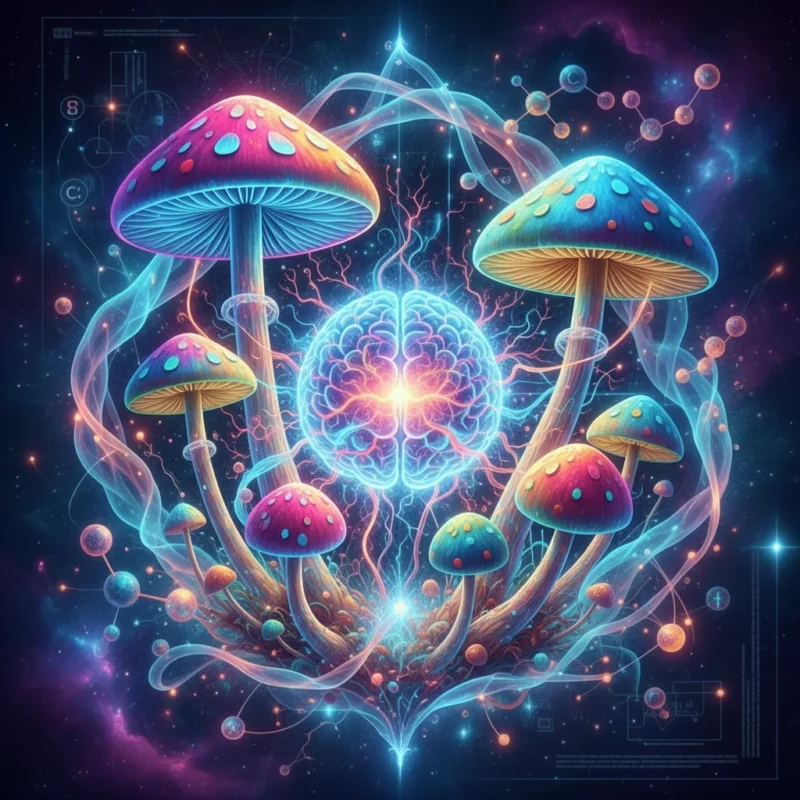
🧠 How Psilocybin Works in the Brain
Psilocybin primarily affects the brain’s serotonin system, particularly a receptor known as 5-HT2A.
Here’s what happens:
1️⃣ Conversion in the Body
- Psilocybin is converted into psilocin.
- Psilocin crosses the blood-brain barrier.
2️⃣ Serotonin Receptor Activation
- Psilocin binds to serotonin receptors.
- This alters communication between brain regions.
3️⃣ Disruption of the “Default Mode Network” (DMN)
The DMN is associated with:
- Self-identity
- Rumination
- Ego boundaries
Psilocybin reduces activity in this network, which may explain:
- “Ego dissolution”
- Feeling connected to others or nature
- Reduced rigid thinking patterns
🌈 Why Perception Changes
Under psilocybin:
- Visual processing becomes more interconnected.
- Brain regions that don’t usually “talk” to each other begin communicating.
- Sensory input may feel amplified or blended (e.g., colours appearing more vivid).
This leads to:
- Visual distortions
- Altered sense of time
- Emotional amplification
🧪 Research in the UK
Clinical research institutions such as Imperial College London have studied psilocybin in controlled, legal settings for potential use in:
- Treatment-resistant depression
- Anxiety related to terminal illness
- Addiction
These studies involve:
- Strict screening
- Controlled dosing
- Psychological support before and after sessions
This is very different from unsupervised recreational use.
⚠️ Risks and Considerations
Although psilocybin is considered physiologically low in toxicity, risks include:
- Anxiety or panic
- Paranoia
- Triggering psychosis in vulnerable individuals
- Dangerous behaviour in unsafe environments
People with a personal or family history of schizophrenia or bipolar disorder are generally advised to avoid psychedelics.
⚖️ UK Legal Reminder
In the UK:
- Psilocybin mushrooms are Class A substances.
- “Delivery” or supply carries severe legal penalties.
- Even fresh mushrooms are illegal.
Legal consequences can include imprisonment and an unlimited fine.
